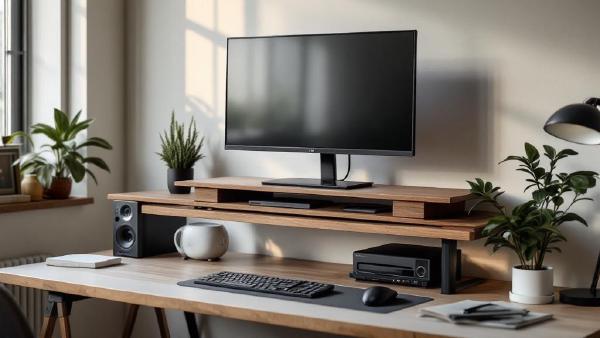
A monitor arm is the gold standard for screen positioning, but a monitor riser does 80% of the job at 20% of the cost — and doubles as desk storage. If your screen sits directly on the desk, you’re looking down at it, and that forward head tilt causes neck strain, shoulder tension, and headaches over time. A riser brings the top of your screen to eye level, which is where ergonomics guidelines say it should be.
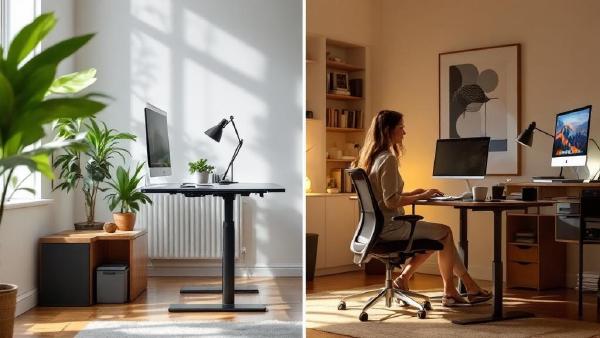
Introduction # Here’s a number that should make you uncomfortable: the World Health Organization estimates that physical inactivity contributes to roughly 3.2 million deaths globally every year. And for those of us who work desk jobs — which is a growing majority of the workforce — a huge portion of that inactivity happens while we’re “at work,” sitting in the same position for eight, ten, sometimes twelve hours a day.
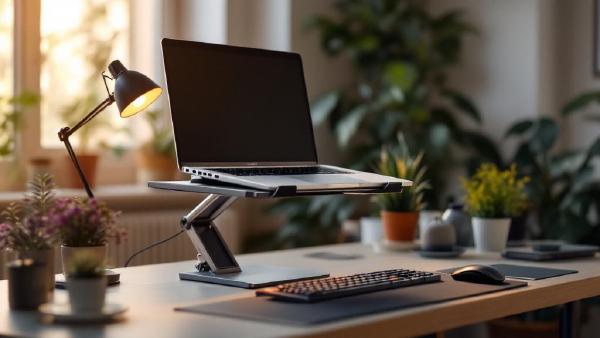
Introduction # If you work from a laptop for any serious amount of time, you’ve probably noticed the problem: the screen is too low. Your neck tilts forward, your shoulders hunch, and after a few hours you’ve got that familiar ache running from the base of your skull down between your shoulder blades. It’s not your imagination — laptop ergonomics are genuinely terrible by design. The keyboard and screen are attached, which means if one is at the right height, the other isn’t.
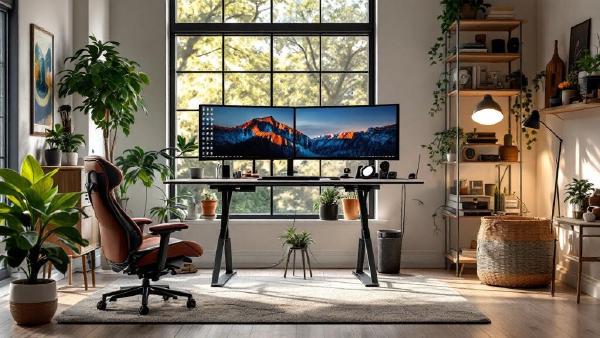
Working from home is brilliant — no commute, your own coffee, trousers optional. But a poorly set-up home office can turn that freedom into neck pain, eye strain, and a productivity slump before you’ve even noticed it happening.
Whether you’re setting up your first dedicated home workspace or upgrading from the kitchen table, this home office setup guide covers everything you need to know. We’ll walk through the essentials in order of priority, suggest specific products where helpful, and share the mistakes we see people make most often.